
Do You Need a Business License to Sell Cakes From Home in LA County?
Do You Need a Business License to Sell Cakes From Home in LA County?
bakery website designers Los Angeles
Short answer: yes, but "a business license" undersells it. Selling cakes from your home kitchen in Los Angeles County means stacking permissions from three separate levels of government: the state (through your county health department), your city (or the county, if you're unincorporated), and the state tax agency. Skip any one of them and you're operating illegally, even if your cakes are wonderful and you're paying your taxes.
Here's the part that trips people up: there is no single "home bakery license" you apply for once and you're done. It's a checklist. Below is what actually has to happen, in the order it usually happens, with the LA County specifics that generic "how to sell food from home" articles tend to skip.
Quick disclaimer: this is general information, not legal advice. Fees and sales caps below are adjusted periodically (some annually, for inflation), so confirm exact current numbers with LA County Department of Public Health and your city before you apply.
The Quick Answer
To legally sell cakes from a home kitchen in LA County, you generally need:
A Cottage Food Operation registration or permit from LA County Department of Public Health (this is the state-law piece — non-negotiable)
A business license or tax registration from your city, or from LA County itself if you're in an unincorporated area
A seller's permit from the California Department of Tax and Fee Administration (CDTFA), in most cases
Possibly a zoning clearance or home occupation permit, depending on your city
A few smaller items: a food handler course, compliant labels, and maybe a fictitious business name filing if you're not operating under your own legal name
None of these are optional, and none of them substitute for each other. Getting your county health permit doesn't mean your city license is automatically handled, and vice versa. Missing just one of these might cost you thousands of dollars in fees and potential closure of your cake business.
Step 1: Register as a Cottage Food Operation (This Is the Big One)
Before you sell a single cupcake, baked goods, candy, etc, California requires you to register with your county's environmental health department under the California Homemade Food Act. In LA County, that's the Department of Public Health, Environmental Health Division — not the city, not the state directly.
You'll choose between two tiers:
Class A — direct sales only. You can sell at farmers markets, from your home, at bake sales, or online for local pickup/delivery, but only directly to the end customer. No inspection is required to register, and the process is largely a self-certification.
Class B — direct sales plus indirect (wholesale) sales. This lets you sell into local stores, cafes, and restaurants, but it requires an actual home kitchen inspection before LA County issues your permit.
At Boxify Web Designs, we primarily work with Class A bakers that sell from home and local farmers markets.
Both classes share the same gross sales ceiling structure, and both cap out at a number that rises slightly each year with inflation. As of 2026, Class A operations are capped at roughly $88,000 in annual gross sales, and Class B at roughly $177,000. These are the inflation-adjusted versions of the original $75,000 / $150,000 limits set when the law was last overhauled, so the exact figure shifts year to year — check the current line on the California Department of Public Health site before you plan around it.
As for cost: LA County's published Class B permit fee (review plus permit) is $292, with an extra $167-per-hour charge if you submit label changes after your initial application. Class A registration has historically run well under that, closer to the $100–$150 range that's typical across California counties. Fees are paid up front and aren't refunded even if your application is denied.
What this means specifically for cakes
This is the detail most people miss. Cottage food law only covers non-potentially hazardous food — meaning food that's genuinely shelf-stable at room temperature without refrigeration. Plain cake is fine. What's on or in the cake is where things get restrictive.
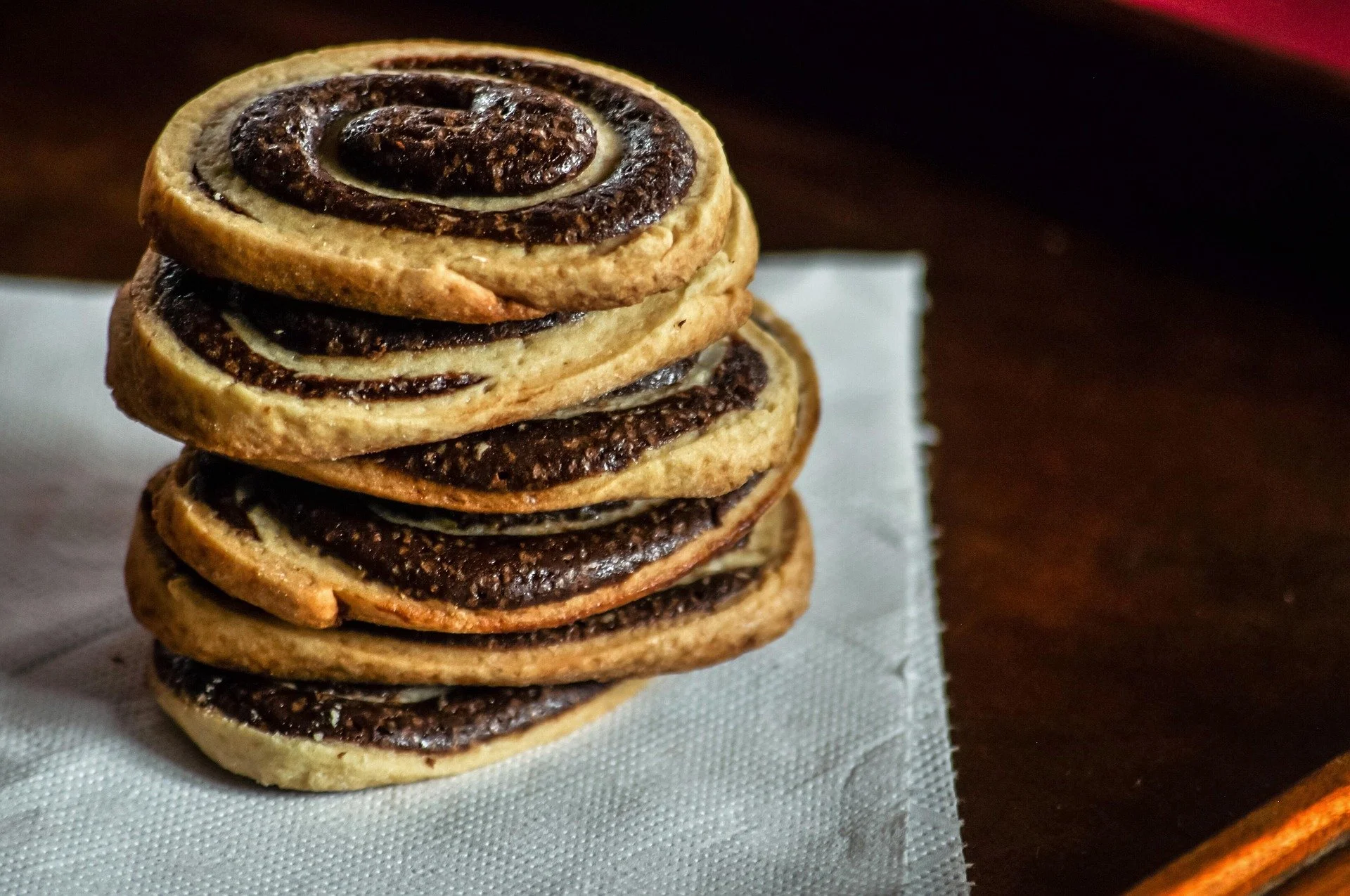
Generally allowed: cakes and cupcakes made with shelf-stable frostings — traditional American buttercream (butter or shortening based, no raw egg), fondant, ganache made without fresh cream, and fruit fillings that are shelf-stable and on the approved list.
baked goods website design solutions
Generally NOT allowed under a standard Cottage Food permit:
Cream cheese frosting or filling
Whipped cream frosting or filling
Custard, pastry cream, or pudding fillings
Cheesecake (it's its own category, and it's excluded outright)
Fresh fruit fillings or toppings that aren't shelf-stable
Anything requiring refrigeration to stay safe
If your signature item is a red velvet cake with cream cheese frosting, that's not a small footnote — it's the most popular thing many home bakers want to sell, and it's exactly the category cottage food law was written to exclude. There's a path around this (more on MEHKO below), but it's not the default cottage food route.
You'll also need to complete an approved food handler/food processor course (typically within a few months of registering) and put compliant labels on every product — your business name and address, the registration or permit number, ingredients in descending order by weight, allergens, net weight, and a statement that the product was made in a home kitchen.
Even though Boxify Web Designs provides packaging designs, we do not provide labels for food compliance. This must be done with a verified printing supply vendor.
Step 2: Get a Business License — From Your City, Not "LA County" in General
This is where things get genuinely confusing, because Los Angeles County contains 88 separate cities, each of which writes its own rules for business licensing and home-based business zoning. There is no single countywide business license that covers all of them. If you're inside city limits, your city is the authority. If you live in an unincorporated pocket of the county, LA County itself issues the license.
If you're inside the City of Los Angeles: you need a Business Tax Registration Certificate (BTRC) from the LA Office of Finance — home-based businesses are explicitly required to register, the same as a storefront. The good news: the city offers a Small Business Exemption. If your worldwide gross receipts are $100,000 or less, you don't owe business tax, but you still have to register and file a renewal every year to claim the exemption. Skip the filing and you lose it. The City of LA does not have a separate home occupation permit on top of this, though you're expected to follow basic rules (no retail foot traffic turning your block into a storefront, etc.).
If you're in another incorporated city — Burbank, Glendale, Pasadena, Santa Monica, and the rest of the cities across the San Fernando Valley and greater LA area each set their own process. Some mirror LA City's gross-receipts tax model. Some charge a flat annual fee. Some explicitly write "cottage food home occupation" into their zoning code and require a separate zoning clearance or home occupation permit before they'll issue the business license — and that permit application typically asks for proof of your LA County DPH registration first. The order matters: get your county health registration sorted before you walk into your city's planning or finance counter.
Its important to check with your local incorporated city for specifics related to cottage food home occupation and what you need before starting the business.
If you're in an unincorporated area of LA County (no city government — county services apply directly), you may need a business license from the county itself rather than a city. LA County's Department of Regional Planning also handles zoning for these areas, since each incorporated city manages its own zoning independently.
Because this varies so much by address, the only reliable move is to call your specific city's Finance or Business License division (or LA County if unincorporated) and ask directly: "I'm registering a Cottage Food Operation — what does my city require for a home-based business license?" Don't assume what worked for a baker friend in the next city over applies to you.
Step 3: Get a Seller's Permit From CDTFA
This one surprises people because the rule has a quirk specific to baked goods. In California, sales of baked goods like bread, cookies, and cakes — including wedding cakes — sold "to go" are generally not subject to sales tax. So why register?
Because a seller's permit from the California Department of Tax and Fee Administration isn't just about collecting tax — it's the mechanism for reporting your sales, even if the amount of tax you owe is zero. Most home bakers register for a seller's permit anyway, file their returns showing nontaxable food sales, and that's that. It's free to obtain. Where tax does apply: if you sell cake by the slice for on-site consumption (think a tasting event with seating), or charge a cake-tasting fee, that activity is generally taxable.
If you're at all uncertain whether your specific sales pattern (farmers markets, online orders with local delivery, occasional wholesale) requires the permit, CDTFA's outreach staff are genuinely helpful by phone and will walk you through it for free.
It's important to collect taxes for each sale to be prepared for the quarterly or yearly tax payment needed to keep your business safe from the IRS.
The Smaller Items People Forget
Fictitious Business Name (DBA): If you're operating as "Sweetline Cakes" instead of selling under your own legal name, file a Fictitious Business Name Statement with the LA County Registrar-Recorder/County Clerk and publish it in a local newspaper as required.
EIN and business structure: A sole proprietorship under your SSN is the simplest path, but plenty of home bakers form an LLC once they're selling regularly, mainly to separate personal assets from business liability. Talk to an accountant or attorney about what fits your situation.
General liability / product liability insurance: Not legally required to register, but worth strongly considering — you're selling something people eat, and an allergic reaction or foodborne illness claim is the realistic risk scenario for a home bakery.
Employees: Cottage food law lets immediate family and household members help freely, but caps you at one additional full-time-equivalent employee beyond that. Hire more, and you're outside cottage food rules entirely.
Ready to hire a website designer to start expanding beyond socials?
What If You Want to Sell Cream Cheese Frosting or Custard-Filled Cakes?
There's one more path worth knowing about: the Microenterprise Home Kitchen Operation (MEHKO) program. LA County opted into MEHKO in 2024 (it's administered countywide except in Pasadena, Long Beach, and Vernon, which run their own health departments). MEHKOs are allowed to prepare and sell food that would be considered potentially hazardous under cottage food rules — including dairy-based items.
The catch is that MEHKO was built around hot, fresh meals sold the same day they're cooked, not packaged baked goods sold over multiple days. It caps you at 30 meals a day and 90 a week, with a $100,000 annual gross sales limit, and the "prepare and serve same-day" framing doesn't map cleanly onto a cake business where customers order ahead and pick up later in the week. For most home bakers whose product is cakes (rather than full plated meals), the more realistic route to selling cream cheese frosting or custard fillings legally is renting time in a licensed commercial or shared-use kitchen and operating as a retail food facility — a bigger step up in cost and oversight, but the one actually designed for perishable baked goods sold on their own.
What Happens If You Skip All This?
Selling without registering isn't a quiet gray area. LA County DPH investigates complaints against unregistered home food businesses, cities can issue citations for unlicensed business activity, and CDTFA can assess back taxes and penalties if you've been selling without reporting. Beyond the legal exposure, none of your sales are covered by anything resembling food safety oversight if something goes wrong — which matters a lot if a customer has an allergic reaction or gets sick and you have zero paper trail showing you followed any standard.
It's also worth saying plainly: most farmers markets, holiday pop-ups, and online marketplaces that cater to legitimate small food businesses will ask for your registration number before they'll let you set up. Not having one closes doors, not just legal risk. Furthermore, working with venues, events and other places will require insurance, and proper paperwork to get hired. Its important, so take the time to do it right or hire a specialist.
Quick Checklist
Download our quick checklist today and start tackling the details.
Hiring Boxify Web Designs will help you get your business website designed by a professional. Boxify Web Designs has been building high quality bakery websites for over 10 years. We started in 2018 in various niche markets and grew beyond that with our founder starting Boxify Web Designs in 2025.
Why Boxify Web Designs
4-6 websites, fully customizable starting as low as $1499.99 on Squarespace.
Mobile Optimized and built to convert
Most projects completed in less than 1-week
Custom Color schemes, and typography selected for your business
Free consultation
The Bigger Picture
None of this is designed to discourage you — thousands of home bakers across LA County operate fully legal cottage food businesses, and the process, while spread across multiple agencies, is genuinely achievable in a few weeks if you tackle it in order: county health permit first, then city license, then seller's permit. Most of the "is this legal" anxiety home bakers feel comes from not knowing the sequence, not from the requirements themselves being unreasonable.
Once you're legitimately licensed, the next thing most home bakers underestimate is how much a real, professional website matters for converting that legitimacy into actual orders — customers searching for a local baker increasingly check for a real site and reviews before they'll hand over a deposit for a wedding cake. If you're at that stage, that's exactly the kind of project we work on at Boxify.